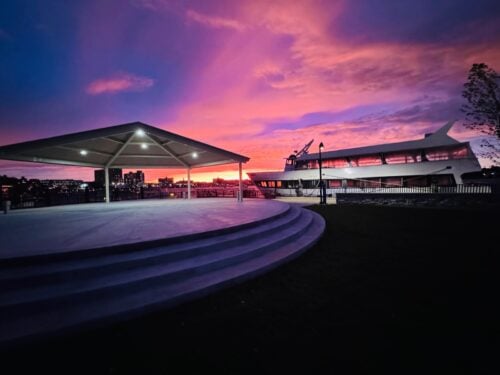




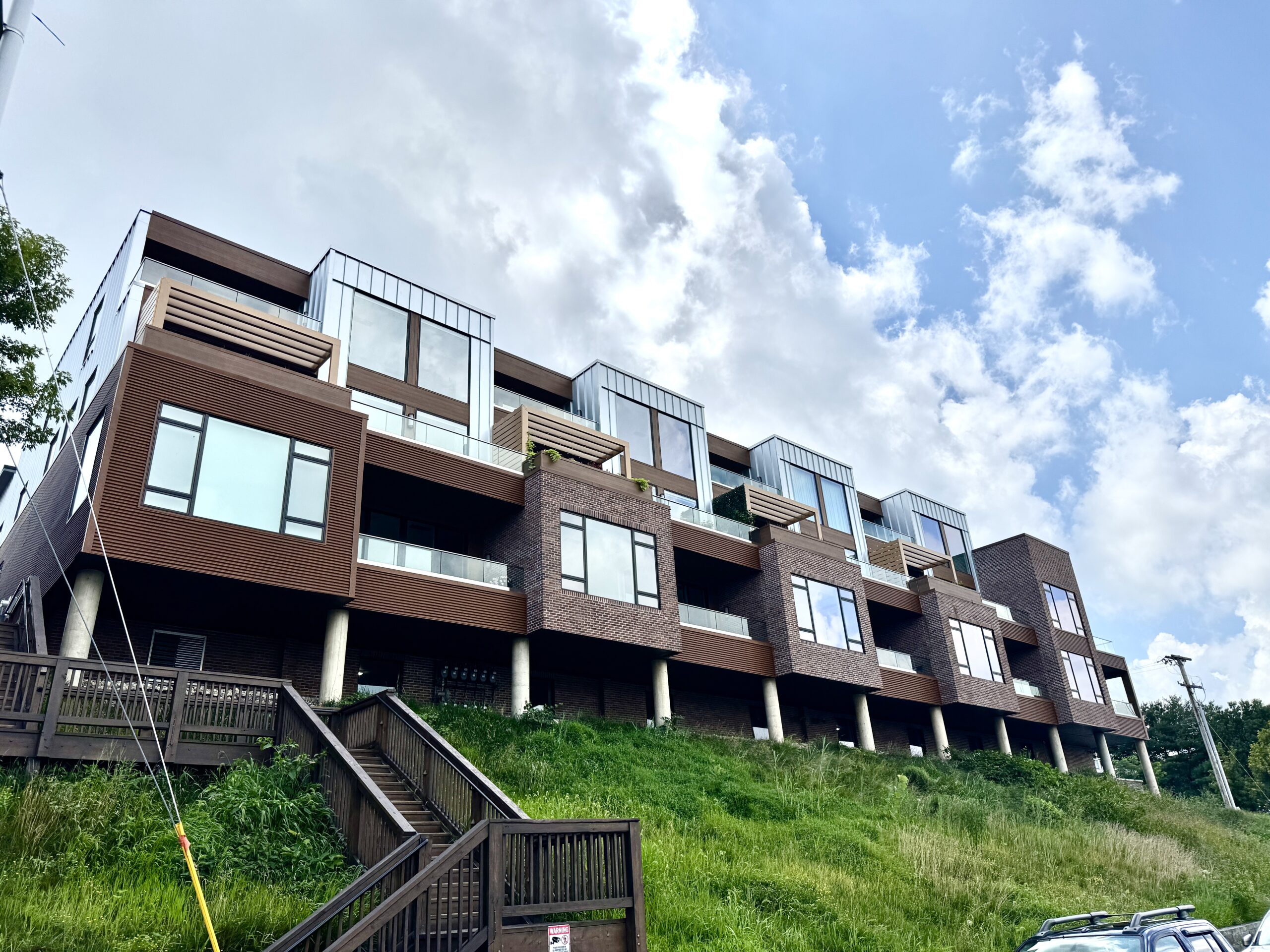
 Southbank at the Navesink on a bluff overlooking the Navesink River in Red Bank. (Photo by Brian Donohue. Click to enlarge.)
By BRIAN DONOHUE
The developer chosen by NJ Transit to build the 350-unit train station redevelopment project is being sued by a condo buyer on a previous Red Bank project who says her newly built $1.7 million home was riddled with construction defects and water damage that left it partially uninhabitable – even before a burst pipe flooded three other units in the building in February.
The accounts of extensive flooding and allegations of construction defects at the ten-unit Southbank at the Navesink complex came to light after another building by the same developer, Denholtz, also saw major flooding and the displacement of tenants due to a burst pipe in late July.
 The interior of one of the units at Southbank on the Navesink in February, 2025. (Photo by Brian Donohue)
At least three units and common areas of the Southbank complex remain under construction to repair extensive water damage from a pipe that burst in the early morning of February 9, with several residents still displaced, according to building permits on file with the Borough of Red Bank, a visit from a reporter, interviews with residents and Red Bank Fire Department radio transmissions.
Two days after that incident, the resident of another unit, Laurie Ann Knott, filed a lawsuit in the State Superior Court in Monmouth County, claiming her home had been plagued by longstanding problems that the builder hid from her during the 2024 purchase and failed to fix afterwards.
The lawsuit alleges fraud, misrepresentation and breach of contract by five Denholtz-associated corporate entities and its chairman, Steven Denholtz.
“The building continues to suffer from extensive water leaks and the presence of mold, which has recently led to three other units needing to be vacated and gutted down to the studs; three additional units with water damage; and water damage to the building lobby as well,” reads a May 12 memo filed by Knott’s attorney, Martin Sknolnick, in response to the company’s motion to dismiss the allegations.
“The Denholtz Defendants knew that their building had major construction problems, including serious water intrusion that they were unable to fix, and yet they proceeded to market and sell this building to buyers (including Plaintiff) as a high-end, high-quality luxury property,” the memo continues.
In a June 9 answer filed with the court, Cherry Hill attorney Margaret Jenks, who represents the Denholtz companies, denied Knott’s allegations. Among a series of defenses, Margaret Jenks argues in part that “the plaintiff is guilty of contributory negligence.”
“Denholtz takes Ms. Knott’s concerns seriously,” a company spokesperson wrote in a statement emailed to redbankgreen. “Prior to litigation, the company made multiple attempts to address her concerns directly and had hoped to avoid this process. Denholtz disputes the allegations in the complaint and has filed a formal answer denying them. Our position is reflected in the court filings, and we remain hopeful this matter can be resolved fairly.”
As for the other apartments damaged by the February 9 pipe burst, the statement reads: “When the February water incident occurred, Denholtz responded promptly upon notification. The company’s immediate priority was ensuring the safety of affected residents and preventing further damage. Denholtz has remained available to support remediation efforts.”
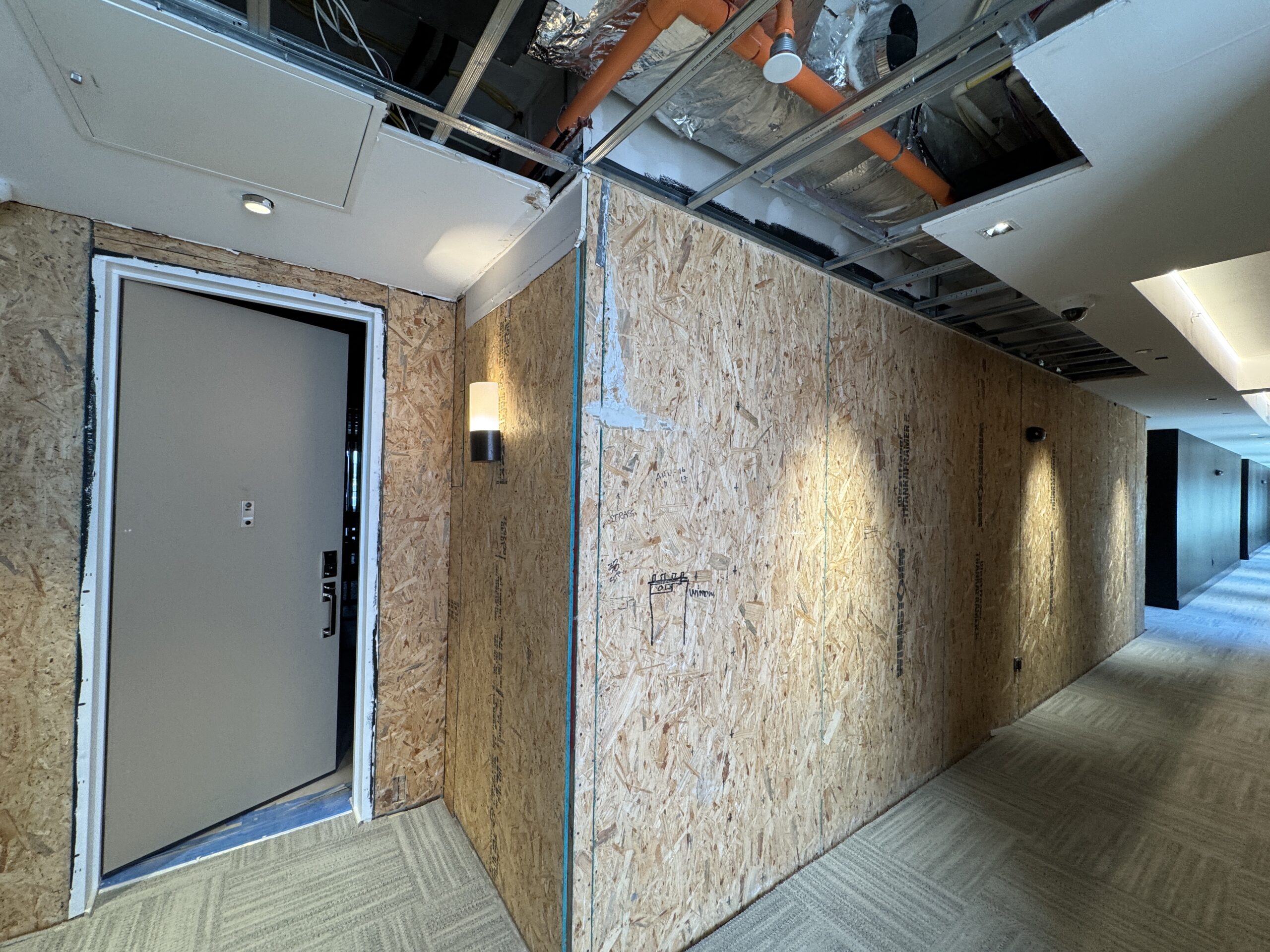
A hallway at Southbank at the Navesink as photographed last week, with signs of what permits on file with the Borough of Red Bank describe as “interior demo due to water damage.” redbankgreen was allowed access to the building by a property owner. (Photo by Brian Donohue)
Knott’s suit also names as a defendant the Asbury Park attorney she hired for the closing, Eric A. Wasserfall.
In an answer filed with the court on March 20, Wasserfall’s attorney, Seth Laver of Princeton, denies Knott’s allegations of misrepresentation, including her claim that he pressured her into closing on the deal.
“Plaintiff proceeded with the transaction with eyes open and without any “pressure” on the part of her attorney,” the filing reads. Laver did not return a phone call seeking comment on the matter.
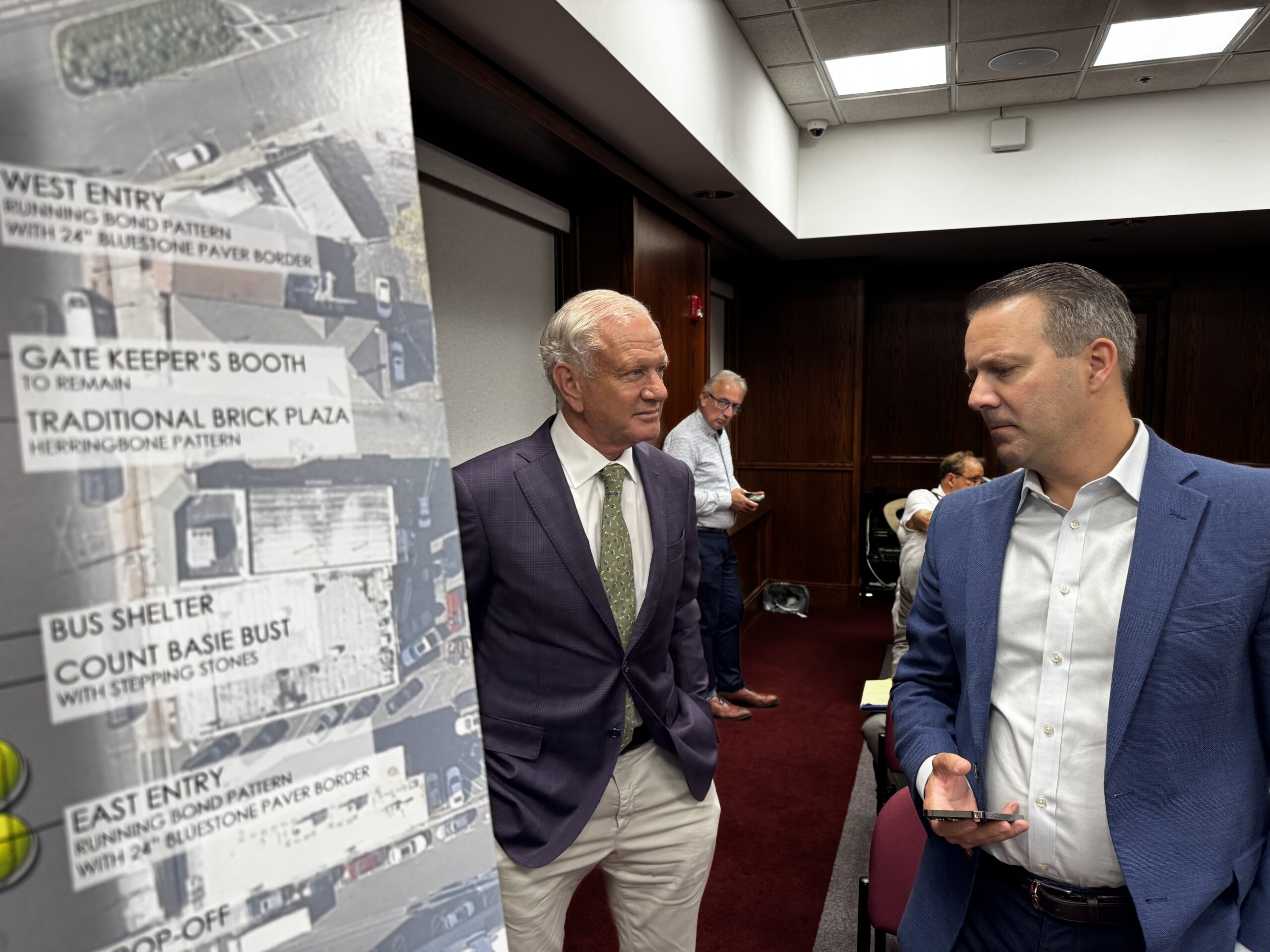 Denholtz CEO Steven Denholtz (left) at the Red Bank Planning Board hearing for The Rail North. (Photo by Brian Donohue)
Construction at Southbank at the Navesink, perched on the bluff overlooking the Navesink River at 4 Boat Club Court, was completed in 2024.
Monmouth County property records indicate eight of the ten condominiums have sold for between $1.6 million and $2.7 million.
The units, described by the builder as “ten exquisite waterfront townhomes,” feature high ceilings and wide windows with spectacular views of the river.
Knott claims she had entered a contract to buy a condo at Southbank when, during a walk-through, she “became concerned with the quality of the construction and identified numerous issues,” according to the 30-page complaint filed in Monmouth County Superior Court on February 11.
In August 2024, she claims in the suit, she hired an engineer who found multiple waterproofing problems with the unit.
When Knott refused to finalize the sale unless the issues were fixed, she claims in the suit, Denholtz attorneys threatened to sue her “for a multitude of alleged damages.”
“Fearing the Denholtz Defendants’ threats of litigation, and faced with pressure from her own legal counsel, Plaintiff felt compelled to close under duress,” the suit reads.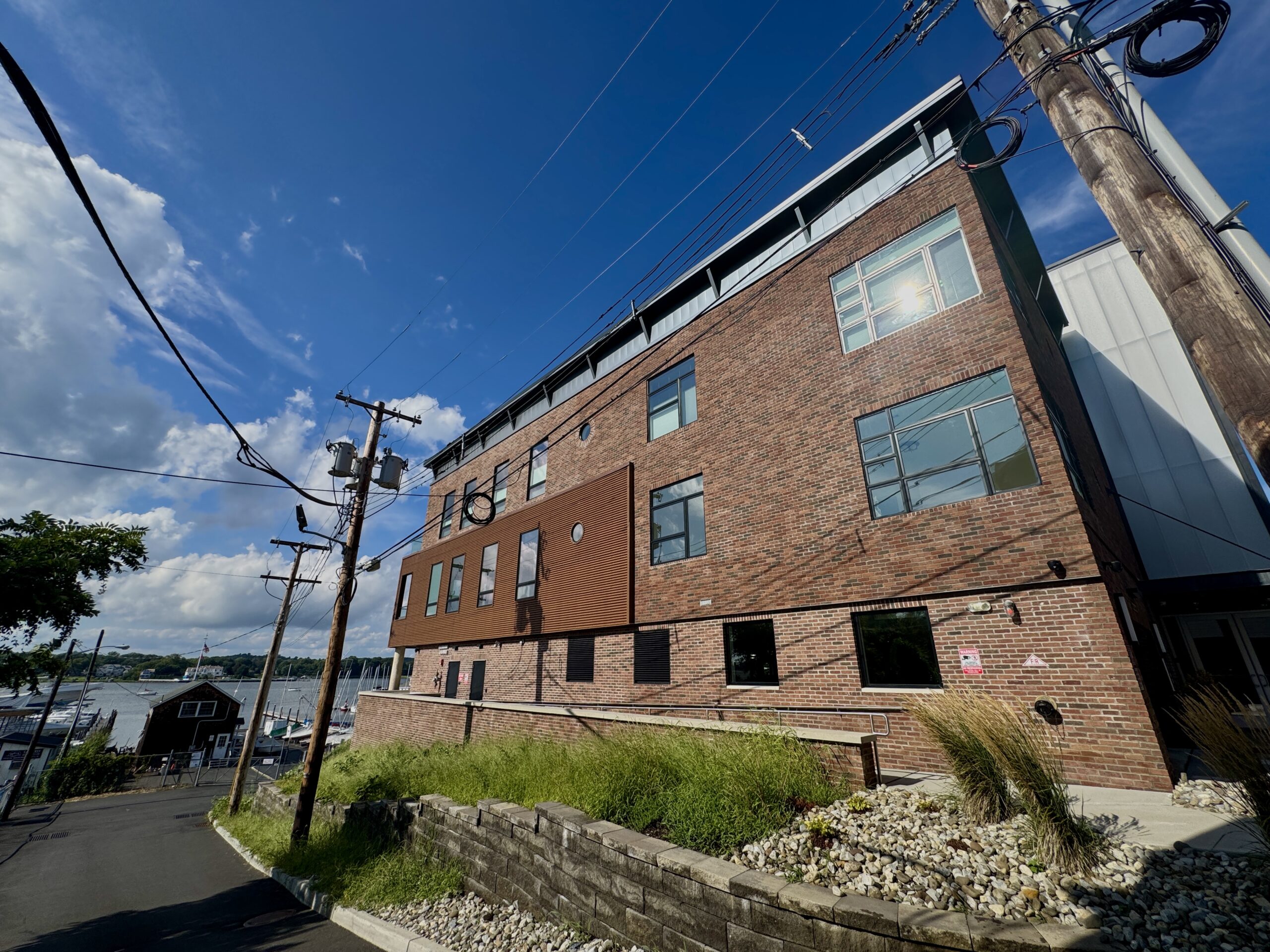
Southbank at the Navesink at 4 Boat Club Court. (Photo by Brian Donohue)
After moving in, the suit claims, she “discovered that the Denholtz Defendants’ representations regarding a lack of prior water infiltration issues were false.” The unit and several others in the building suffer from extensive water damage to the walls and flooring, the suit claims.
In December, 2024, the suit claims, her home and an adjacent unit sustained serious water damage from a leaky hose bib. The damages forced construction crews to rip out sheetrock and flooring.
“Instead of providing new materials, the Denholtz Defendants removed existing flooring from another unsold unit and replaced Plaintiff’s damaged flooring with used materials that do not match the color of her existing floors,” the suit reads.
Her suit also contains a list of 23 other alleged defects, from bowed flooring to malfunctioning lights, sinks not draining properly and “cracked drywall in every room.”
Denholtz, her attorney argues in a May 12 filing in the case, “systematically misrepresented to Plaintiff (and the public at large) that the Southbank Property would be a luxury condominium built with the highest construction standards. They induced Plaintiff with these representations to enter into a Purchase Agreement for the Unit, while knowing—and concealing from Plaintiff— that the entire building was poorly built and rife with a myriad of fundamental construction defects, including pervasive water infiltration problems.”
Denholtz attorneys filed a motion to dismiss six of the counts in Knott’s lawsuit, describing the case as a construction/contract dispute.
In a May 26 ruling, Superior Court Judge Thomas Comer dismissed one of the six counts, allowing the other five challenged claims to proceed.
Presumably, Knott’s attorneys were already preparing to file the suit when, at 2:20 am on February 9, the Red Bank Fire Department was called for reports of a fire alarm going off in the complex and water pouring into condo units and common areas.
“We just got an additional call, apartment 3B, stating there’s water coming in through the ceiling to her apartment,” said a Red Bank police dispatcher, according to an archive of fire department transmissions from that night. “Patrol is on the scene – confirmed. Large amount of water in apartment 3B.”
Borough of Red Bank records show permits were opened on May 27 for interior demolition due to water damage in the common area, three units on the second floor and one unit on the third floor. Permits were also issued on July 30 for insulation and sheetrock due to water damage in a third-floor apartment.
On the invitation of a resident, a reporter entered the building last week and saw the doors of several units ajar, with walls open to the studs and signs of ongoing construction.
Sheetrock had also been removed along the floors of common areas on the first and second floors. A crew from a sprinkler installation company was on site.
Knott’s lawsuit mentions the incident only briefly: “Even more recently, a water sprinkler pipe broke above a third floor unit. Plaintiff was informed that this caused flooding in several adjacent units on her floor, as well as the second floor hallways, lobby, stairwell, elevator and through the garage ceiling.”
Southbank residents displaced in February were joined in their troubles last week by residents of another Denholtz building, The Rail at 118 Chestnut Street.
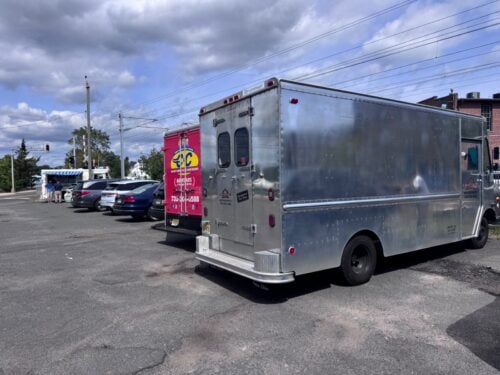
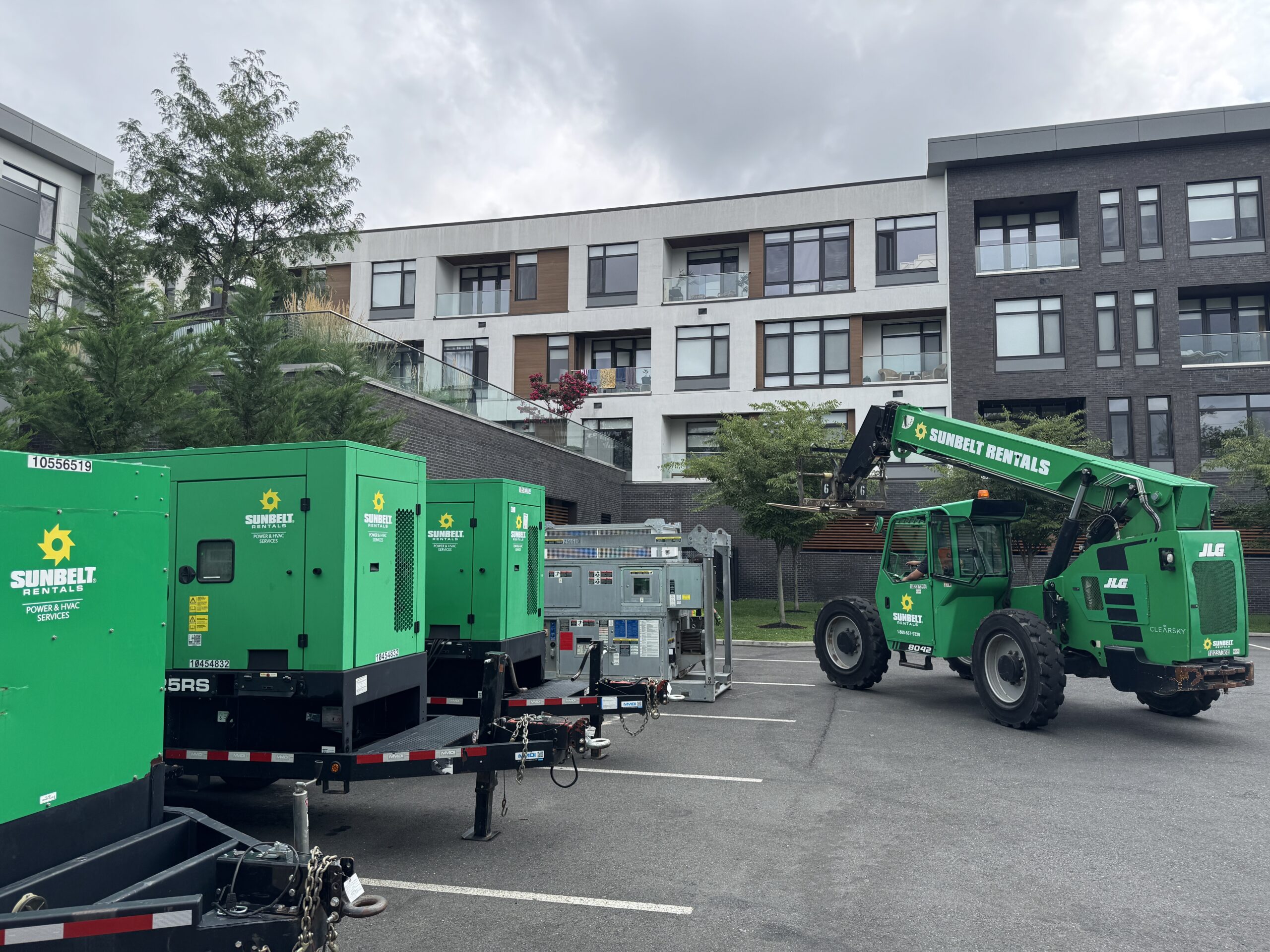 Remediation equipment is delivered to the parking lot outside The Rail apartment building after a pipe burst flooding large portions of the building on July 29. (Photo by Brian Donohue)
At least a dozen units in the 57-unit rental building alongside the train station were damaged when a pipe burst on the third floor on July 29.
And it comes as the Red Bank Planning Board prepares for a second public hearing over Denholtz’s application to build a 175-unit apartment building as the first phase of the train station redevelopment.
The company, whose headquarters sit next door to The Rail, is NJ Transit’s designated developer for the massive train station redevelopment that could eventually include up to 351 apartments, parking garages, retail and public plazas.
Board members earlier this month sent architects back to the drawing board with scathing criticism of the designs submitted by Denholtz for site plan approval. The hearing is slated to resume in September.
redbankgreen editor Brian Donohue may be reached via email at [email protected] or by calling or texting 848-331-8331.