



 Bob Sickles Sr. riding high on his 1948 John Deere MT tractor.
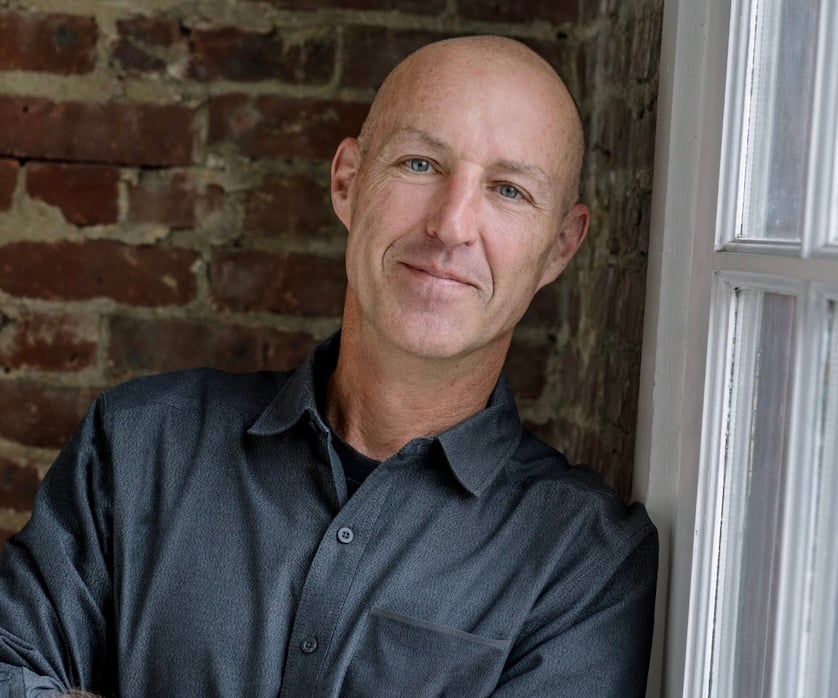
Eighty years old, and with a still-thick crop of hair, Bob Sickles Sr. sits at his son Bob’s desk and picks through a boxful of documents in his lap, many of them bearing the swooping calligraphy of ages past.
There are diaries, certificates, courtship letters items that, while quaintly formal by today’s standards, convey an astonishing sense of intimacy with people long dead, their times relegated to history lessons.
“I have some letters that are 200 years old in this box,” Sickles says. Though he grew up in the house in whose attic his daughter Virginia collected them two summers ago, he’d never really looked at them, he says, and “there’s still more up there.”
The box came out because redbankgreen had dropped by to get the elder Sickle’s thoughts on the family centennial of the farm in Little Silver.
But in context, that milestone is easily dwarfed by the fact that this is only the latest century of an agricultural endeavor now in its fourth.
 The 1870 diary of Bob Sickles Sr.’s grandfather, Theodore Sickles, and his July 15, 1908 obituary in the Red Bank Register are among the family’s relics.
What we know as Sickles Market was for its first 245 years the Parker farm. The Parkers were Quakers who settled locally in the 1660s after fleeing persecution by Puritans in Rhode Island, and eventually owned a parcel of land that stretched from the Navesink to the Shrewsbury.
In the 19th century, meanwhile, the Sickleses were farming in Shrewsbury. On the present site of Lawes Coal Co., one of eight brothers, Theodore Sickles, born in 1835, built buggies, ran a general store and served as postmaster during the Civil War. Later, he owned a grocery store on Red Bank’s Broad Street, between Mechanic and Front. He went bankrupt as a result of easy credit and a partnership with an alcoholic.
But Theodore had married a Parker gal Julia and not for the last time would a woman save the day for a Sickles. She became heir to 21 acres in Little Silver.
“That’s how we ended up here,” Sickles says. “My father came over here in nineteen-eight with his mother and brother, bankrupt and broke.”
Theodore died that year. Bob’s father, Harold, knew nothing about farming he’d been working for the telephone company in Long Branch. But he started working a patch of land that the Parkers had rented to Little Silver’s Lovett family for a nursery.
“He had to grub it all out,” Sickles said. He grew asparagus, strawberries, raspberries, tomatoes and lettuce. “He got along pretty good.”
Good enough, at least, to borrow $3,000 from a judge. He used $2,700 of it to build a house. The mortgage ran for 50 years, at 3 percent interest. The house still stands, just opposite the entrance to what’s now the enclosed market.
Like untold others, though, Harold was close to the brink of failure during the Depression. Charlotte, his only other child, became ill with scarlet fever, and medical bills nearly wiped the family out. Two Citarella brothers, who had a butcher shop where Little Szechuan Chinese restaurant is now, would give the family food to get through the winter, and Harold would pay them back later in the year in asparagus and strawberries.
“It was tough,” Sickles says. “Your family fed you, or you begged.”
Toward the end of Depression, a Little Silver woman who’d befriended Bob’s mother, Elsie, when she first came to the United States from England shortly before World War I, left young Sickles $7,500 an astonishing sum at the time. But he couldn’t touch it until he was 21 unless he used it for educational purposes. Shortly after an accident made him ineligible for the military draft, Sickles returned to the farm and, in 1949, bought a John Deere MT tractor for $700. All he’d ever really wanted to do was farm, he says.
He also started renting land in Fair Haven, Colts Neck, Holmdel, Middletown and elsewhere. A farmer needed to sell into the wholesale markets to make it, and for that, he needed volume. At the peak, the Sickleses had 200 acres scattered across northern Monmouth County. Some of the patches they could still drive a tractor to in the early hours without having any effect on traffic.
“We always had a hundred acres of sweet corn and a lot of tomatoes,” Sickles says.
But even when he was supplying produce to eight A&P stores wholesale, farming was never lucrative. In the winters, he worked at a the Henderson greenhouse where exit 109 of the Garden State Parkway is now.
“My father said, ‘you’ve got to get closer to the public. Go retail,'” he recalls. “That changed a lot.”
Elsie started selling melons, sweet corn, asparagus and tomatoes from a single-car garage under a maple tree in 1948.
Bob married Adelaide Hoyt in 1953. “She had saved $3,000, and she gave that to me to buy an irrigation system,” he says. “We were always a team. I couldn’t have done it without her.” They raised four children, two girls and two boys. Bob Jr. and Ted work in the market; daughters Virginia and Jane live out of state.
The market survived a fire, growth spurts and a risky foray into real estate development. In the 1980s, Sickles went into partnership to build the Alderbook gated condo community on a portion of the farm, a project that wound up taking 18 years to complete, mainly because of a collapse in real estate values.
With a $15 million mortgage hanging over the project, “We pretty near lost it,” Sickles said. But he eventually made enough money to help Bob Jr. transform the market into a year-round, well-stocked food and garden emporium.
Given his connection to the land, does Sickles feel conflicted about developing farmland?
“I would today more than I did then, because I couldn’t spray anymore,” he says. “I was spraying some pretty rough stuff on the peaches. Little kids would be standing by the side of the road waving at me. I decided I just couldn’t do it anymore.” Complaints about noise and smells from neighbors also factored into it, he says.
Today, he says, farmland has become so precious that it would be harder to give up, though that outcome would perhaps no less inevitable. “It’s going so fast, there won’t be any left,” he says.
Of course, there have been other dramatic changes in agriculture more in Sickles’ lifetime than in the centuries lived by his ancestors. “When I was a kid, you had asparagus from the fifteenth of April to the fifteenth of June, and you never saw it again,” he says. Now, it’s year-round, flown in from overseas though to him it doesn’t taste as good. “But Bob’s market couldn’t operate if it didn’t have everything to sell,” the elder Sickles says. “If you don’t have, people want to know why you don’t have it.”
But there are still vestiges of the old times. The homestead stlll features a red barn, which came from Sears, Roebuck and Company and cost $700, and it still has its original galvanized steel roof. The John Deere still runs and is used frequently. The house Sickles built in 1957 next to his father’s house, right smack in the middle of an asparagus field is still the place he and Adelaide call home. And he’s still the farmer, growing blackberries, raspberries and tomatoes, though the spread is down to three acres here.
“I love to see things grow that’s my passion,” he says.
“It’s like walking into a greenhouse at night. You know, in the daytime, all leaves are down. But at night is when they grow, so they stick up like this,” he says, holding his hands up like rabbit ears. “So when you go into a greenhouse, and I always check the furnaces at night, all these plants, no matter whether they’re tomatoes or peppers everything they stick up. And that’s… that’s my thing. When you plant something and it grows, and it produces what it’s supposed to, it really gives you a lift.”