An osprey nest with three chicks photographed on a Navesink River dock in June. (Photos courtesy of Ben Wurst).
By BRIAN DONOHUE
In June, longtime fishing guide Paul Eidmen and Ben Wurst, researcher with Conserve Wildlife Foundation New Jersey, set out in Eidman’s boat to count the osprey eggs and chicks in nests along the Navesink River.
In 19 nests from Red Bank to Sea Bright, their GoPro camera attached to a long pole recorded 22 baby birds or eggs.
When Eidman went back weeks later, at a time when the young are normally fledging, he pulled up at nest after nest and found nothing.
“Everything was dead,” said Eidman, who has been running fishing charters on the river for decades.
The 33 nests on Barnegat Bay Wurst closely monitored this summer produced just two young, compared to about 35 in a typical year, he said.
“My summer has been filled with death and despair,” Wurst wrote in a blog post accompanied by a
a photo of a dead osprey and its starving sibling in a nest near Manahawkin. “Every. Single. Day.”
Eidman and Wurst’s foray marks the first attempt to gauge the problem on the Navesink River in and around Red Bank.
In an interview with redbankgreen Wurst said his and Eidman’s preliminary survey on the Navesink didn’t include enough detailed follow-up observations to confirm that the chicks observed earlier in the season had died.
Wurst, who focuses on his work along Barnegat Bay, did not accompany Eidman on the follow-up nest visits.
He’s hoping to train and enlist more citizen scientists to conduct more detailed study of local nests in the coming years.
“We have to confirm that they died, or see remains for it to be scientifically indisputable,” he said.
While no dead birds were spotted, Eidman, who has spent decades leading charter fishing trips in the Navesink and Raritan Bay, said he’s certain none of the chicks he and Wurst recorded made it to adulthood.
“All I can say is there were no fledglings,” he said.
Eidman, who heads the nonprofit organization Menhaden Defenders has joined a growing chorus of conservationists who blame the osprey decline on commercial overfishing of Atlantic menhaden, also known as bunker.
Bunker are a slow-swimming, oily filter feeder that form a crucial base of the food chain as a primary source of protein for striped bass, bluefish, humpback whales, osprey, and bald eagles.
Menhaden spend much of their lives in the ocean, but move into rivers and estuaries in warmer months.
They are harvested by a Virginia-based company (with a Canadian parent company), Omega Protein, which employs spotter planes to locate schools and boats that encircle the dense schools with nets.
The fish are used to produce animal feed, fish oil supplements and other products.
Besides counting the osprey, Eidman also also spent time this summer tracking, and sometimes following and filming the boats off the coast of Sandy Hook.
An Omega protein boat photographed by Capt. Paul Eidman at a spot he said was four miles off Sandy Hook this summer.
Omega representatives and commercial fishing industry representatives have repeatedly argued there is no scientifically proven shortage of menhaden.
In a column in the Richmond Times-Dispatch, Jason Joyce director of advocacy for the New England Fishermen’s Stewardship Association wrote, “Hungry ospreys prove food stress. They do not prove a menhaden shortage.”
“Even a documented local shortage would not prove fishing caused it, nor would it prove that drastically reducing the fishery would restore osprey reproduction,” he continued. “The osprey chicks in Chesapeake Bay deserve answers. Commercial fishermen should not be declared responsible without evidence. “
States from Maine to Virginia are holding a series of public hearings on a new ASMFC plan to set allowable catch levels. Among the proposals is a 50 percent reduction in menhaden harvesting coastwide.
The New Jersey Department of Environmental Protection’s hearing will be held virtually only on Tuesday, September 22 at 6 pm.





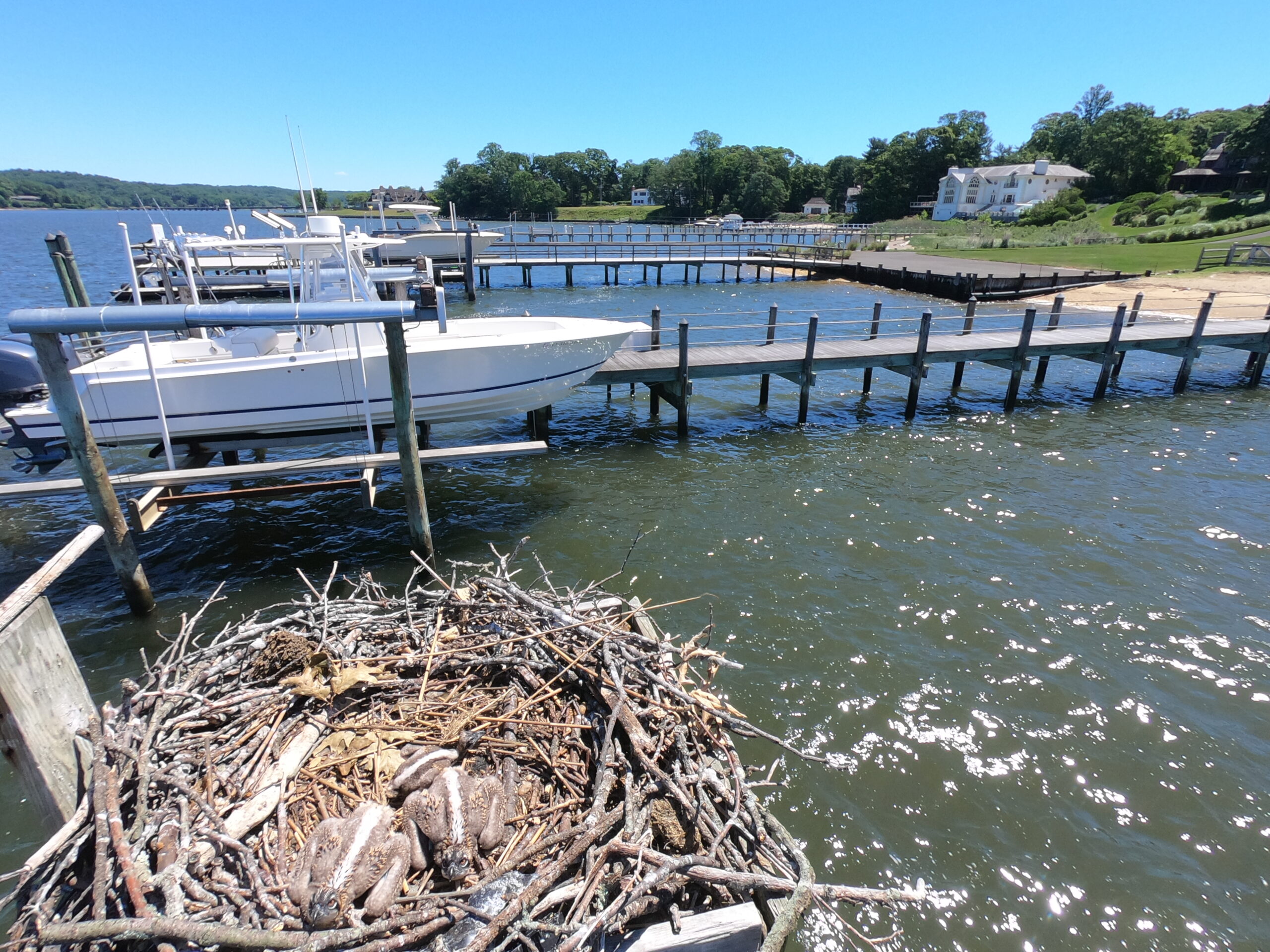 An osprey nest with three chicks photographed on a Navesink River dock in June. (Photos courtesy of Ben Wurst).
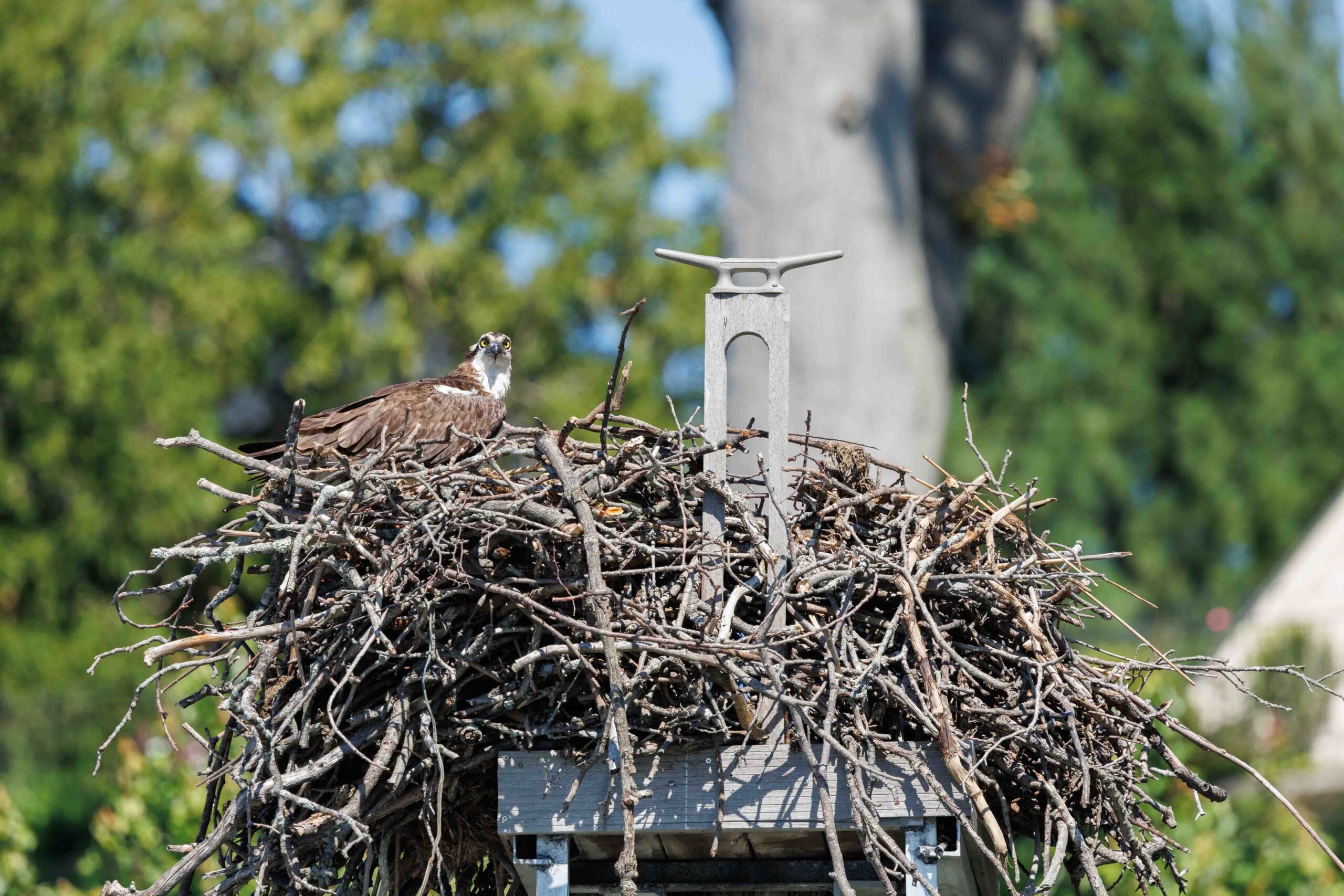 From the Chesapeake Bay to the New York Bight, wildlife advocates say baby osprey chicks have been dying in recent years due to a lack of food.
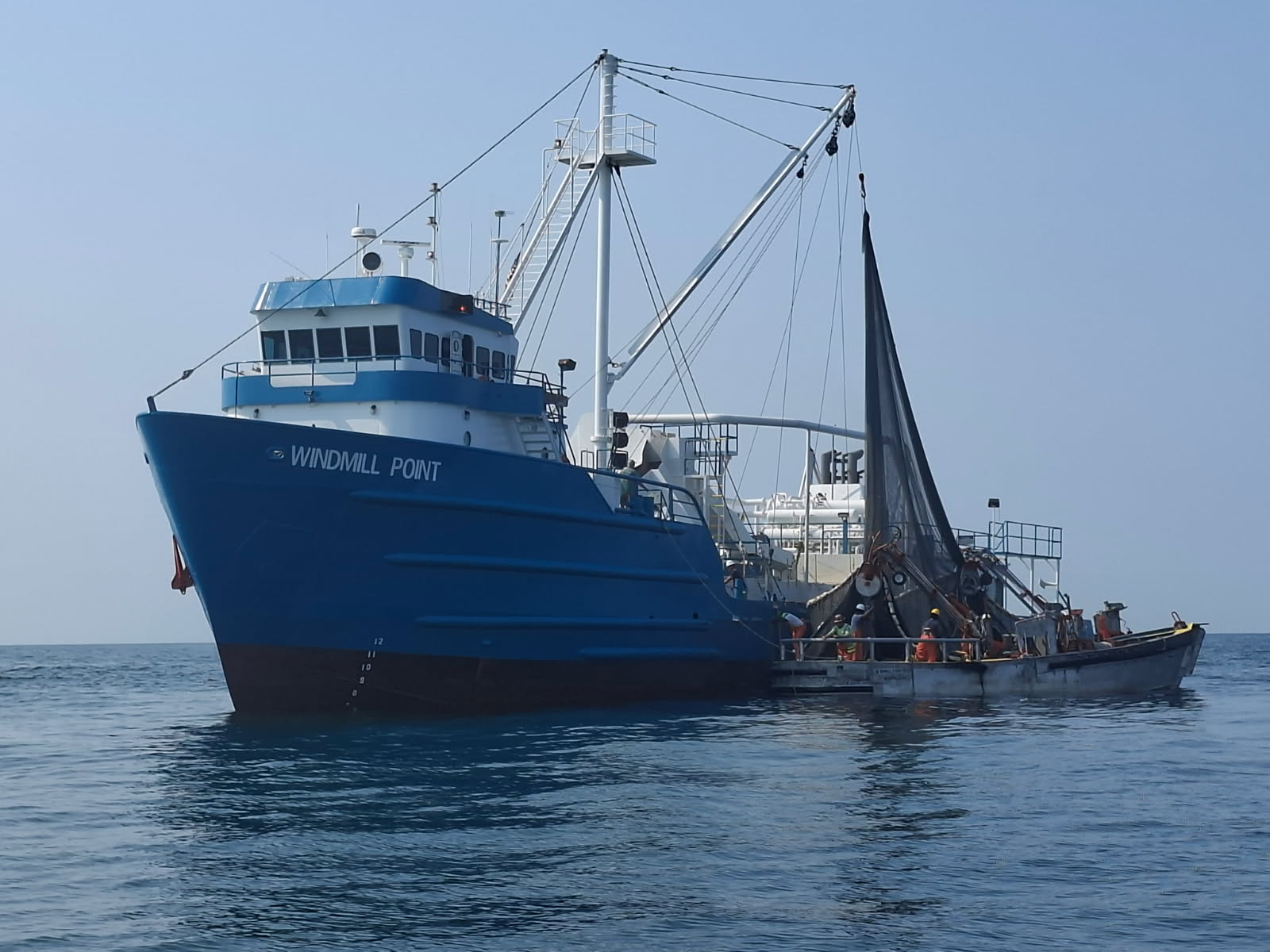 An Omega protein boat photographed by Capt. Paul Eidman at a spot he said was four miles off Sandy Hook this summer.