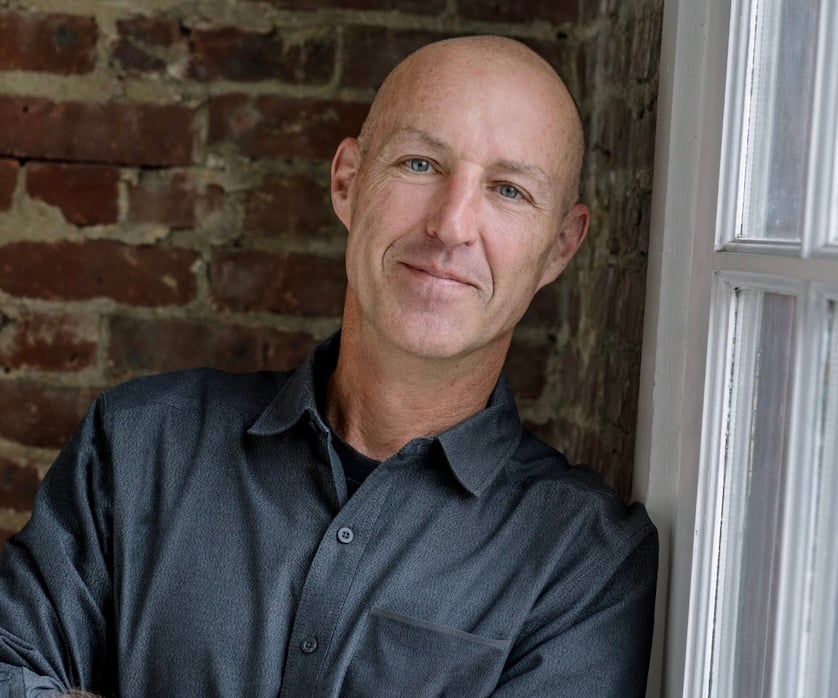




 Red Bank Regional High School teacher Sara Mazzone holds a proclamation honoring her by issued by NJ 11th District legislators Sen. Vin Gopal and Assemblywomen Luanne Peterpaul and Margie Donjon (far right) at a meeting of the Red Bank Mayor and Council last month. (Photo by Brian Donohue. Click to enlarge.)
By BRIAN DONOHUE
The letter from a parent at Red Bank Regional High School to English Teacher Sara Mazzone could easily get the parent of any struggling teen a little choked up.
“Your class was the first advanced class my daughter has ever taken,” the letter reads. “She was scared, nervous, and so insecure at the beginning of the year, but with your guidance and compassion, she thrived. She is leaving her junior year with much more confidence academically, and this is in large part because of you. You made her feel like she belonged in your class, and for that, I am forever grateful.”
Mazzone, who has taught at Red Bank Regional since 2010, was last month named by the state of New Jersey Monmouth County Teacher the Year, selected from more than 200 entrants. As students and teachers prepared to head back to school last week, redbankgreen caught up with her to learn how and why she what she does. The Q and A has been edited for brevity.
Q. A new school year is here. What’s going through your head these days before the first day of class? What are the emotions like?
A. The start of a new school year is always exciting because it offers a new beginning. Each year when I introduce myself to my students, I explain that they will likely teach me as much as I teach them. At first, there are often skeptical looks and a bit of eye-rolling, but they soon learn that I wholeheartedly mean what I say. It may be that they provide me with new insight or a way of analyzing a page from a novel I’ve read dozens of times. It could be that they offer their unique perspectives based on their lived experiences. One of my favorite aspects of teaching teenagers is that my kids are at a critical point of change. They’re navigating their way through that space between childhood and adulthood. At moments, I see their child-like innocence through their questions or conceptualization of the world around them. At other times, I find their wisdom – perhaps because of their proximity to their childhood – so profound that it alters my perspective too. This excitement and possibility is something that I strive to help foster in my classroom as my students find their passions.
Q. You were named Monmouth County Teacher of the Year last year. What is it about your work and the way you do the job that got you recognized? What motivates you?
A. There are so many incredible educators across the state, who are doing amazing things with and for their students each and every day, many of whom are never recognized formally with any title or award. I am humbled and honored to be chosen to represent our great county this year.
At RBR, I have taught many different English courses, but by far, my two favorite classes to teach are AP English Language and a course I designed in 2011 called Graphic Novels and Visual Literacy, which was the only of its kind in New Jersey at the time. Both courses are interdisciplinary in nature, allowing me to help students find their passions and potential through readings from different disciplines and playing with different mediums of expression. I enjoy teaching the writing process, creating a classroom that brings together both images and words, and helping students learn to read the world around them, where they use the power of rhetoric to defend their positions in arguments in AP English or by interpreting the complex interplay of images and words in my Graphic Novels course.
My greatest accomplishments as a teacher come directly from my experiences and education, which have ingrained in me the value of challenging boundaries and expectations, whether that be through my course content that blurs disciplinary lines, my ability to publish a book as a 22-year-old fresh out of college, or my accomplishment of earning doctoral degree while remaining committed to classroom teaching. I’m most at home – and most proud of – my time in my classroom with “my kids.” I want them to understand the value of what they learn in the classroom, regardless of what path they pursue. Within those four walls, I’m able to open a world for my students and teach them the power of refusing to stay inside.
Q. How has teaching changed since you started your career? What are you seeing in the kids, in the work? The parents? Also, what never changes?
A. Changes in education sometimes happen at breakneck speed, but a lot of what I do each day really remains the same. I’ve taught at Red Bank Regional since 2010, so perhaps the most notable changes are those related to technology. Access to smartphones, social media, and more recently, advances in AI technologies have changed how students interact with one another, how they access information, and how they focus their attention or spend their free time. As an English teacher, part of my job is to help students evaluate and think critically about the information that they see in digital spaces and also remind them to self-reflect on their communication both in-person and when using these technologies.
However, there are a lot of elements of my job that have also remained the same. English class is so much more than simply reading novels and writing essays. It’s about communication, working through conflict, and understanding how to interact with those around us with confidence, poise, and respect. To my students, my message is and always will be that hard things are worth doing. Tough conversations with individuals unlike themselves are important and vital to the future health of our society. I make it a priority to incorporate lessons and activities where they can understand this greater significance in what we’re learning. The ultimate goal is that they learn and grow together. I want them to understand that it’s ok to not have the answer, and it’s ok to be wrong. I try to model for them the struggle of working through the writing process and celebrate the epiphanies when it finally clicks. I try to acknowledge the reward of sticking with challenging readings or assignments and reinforce the importance of learning to navigate tough conversations or arguments with informed opinions. When they leave my classroom at the end of the year, I want my kids to know that their ideas are valuable, and they have voices that deserve to be heard.
Q. When you look back, what do you see as your greatest success?
A. My greatest success as an educator is seeing my students succeed. At the end of each year, one of my favorite events to attend is graduation to watch my students walk across the stage into the next chapter of their lives.
More specifically, I have been fortunate to support initiatives at RBR to remove barriers to upper-level classes, opening access to all students willing to take on the rigorous coursework for the first time. More students than ever are now embarking on the challenge at RBR, feeling confident in their abilities to meet and exceed the expectations. It is truly an honor to have the opportunity to teach so many wonderfully talented kids in our community, and an email from a parent of my former student is perhaps most reflective of the work that we have accomplished.
It is my hope that my students will one day pay it forward and help support the young people in their lives to learn and grow, whether or not they pursue a career in the teaching profession. I am honored to have simply been a part of their stories.
Q. What’s one of the moments or classes, or students or anything where you look back and say, “I wish I had done that differently?”
A. As educators, we make countless decisions every single day in order to meet the needs of our students. There are times when we need to change plans mid-lesson to address questions that we didn’t anticipate. There are times where we need to pause to reflect on local, national, or global events to help our students understand how our course content relates to their lives beyond our classroom walls. There are also numerous times where we explain a concept several different ways or change an assessment to meet our students’ diverse needs. The ability to change and adapt is crucial to successful teaching, and reflecting on each and every lesson to see what can be improved or “done differently,” is part of what makes teaching both challenging and exciting because we are all learning together.
Our school includes a diverse student body, bringing with them different cultural, racial, and economic lenses through which they view the world. In creating my classroom space, I prioritize students’ perspectives, whether it be while discussing literature, during debates, or by including evidence when writing argument essays. In order to ensure that students are connected to both each other and the world around them, I continually modify my lessons to reflect diversity in thought and perspective. I bring my students into national and global conversations, allowing them to become informed, voice their varying opinions, and share their perspectives while also teaching them to do so in a respectful and tolerant manner of each other.
A. You are an English teacher, so I can’t help but ask you about books. Have the books kids seem to like to read or study changed since you’ve been a teacher? If so, how? What are your favorite titles or types of literature to teach? What are your favorite books as a reader/writer yourself?
A. Just like trends in music, fashion, or pop culture, there are certainly trends that fluctuate in terms of my students’ reading habits; however, there are also constants that remain the same. Although some may suggest that teens today are no longer avid readers, I do not believe that we can put all kids into one category or write them off as non-readers simply because of their age or generation. There have always been students who are voracious readers and devour the latest fiction on their own time. Others prefer to read articles related to their interests and hobbies, or they may read the news to keep abreast of current events or their favorite teams. I don’t think reading has disappeared over the years; it has simply changed. Kids are reading all day in a much broader sense beyond simply picking up paperback books, which of course, is still important. However, media and visual literacy are also more important than ever today, and part of my job is helping kids navigate the world outside of the classroom to read and understand the massive amount of information to which they are exposed on a daily basis. I try to model for my students that there’s value in them reading literature, but there’s also value in listening to quality podcasts, reading articles from reputable news outlets, watching TEDTalk lectures or documentaries about topics that may interest them, or reading with the purpose of learning how to do or make something new.
In addition to teaching AP English Language, where we mostly read non-fiction pieces and the texts often fluctuate from year to year based on current events or my students’ interests, my favorite texts to teach by far are graphic novels. I have taught a course called Graphic Novels and Visual Literacy at RBR since 2011, and students can now also earn college credit for the course through a dual-enrollment partnership with Stockton University. The class allows us to learn from one another because I often have avid comic book and graphic novel readers enrolled alongside other students, who have never read a comic book before, or even those students, who may be reluctant to read. Everyone brings a different perspective, which always keeps the course content fresh and exciting.
Personally, I’m an avid reader of the news, a self-described NPR podcast junkie, and I am a regular at our local library where I love to explore the latest fiction and best sellers with my daughters.
redbankgreen editor Brian Donohue may be reached via email at [email protected] or by calling or texting 848-331-8331 or yelling his name loudly as he walks by. Do you value the news coverage provided by redbankgreen? Please become a financial supporter if you haven’t already. Click here to set your own level of monthly or annual contribution.