



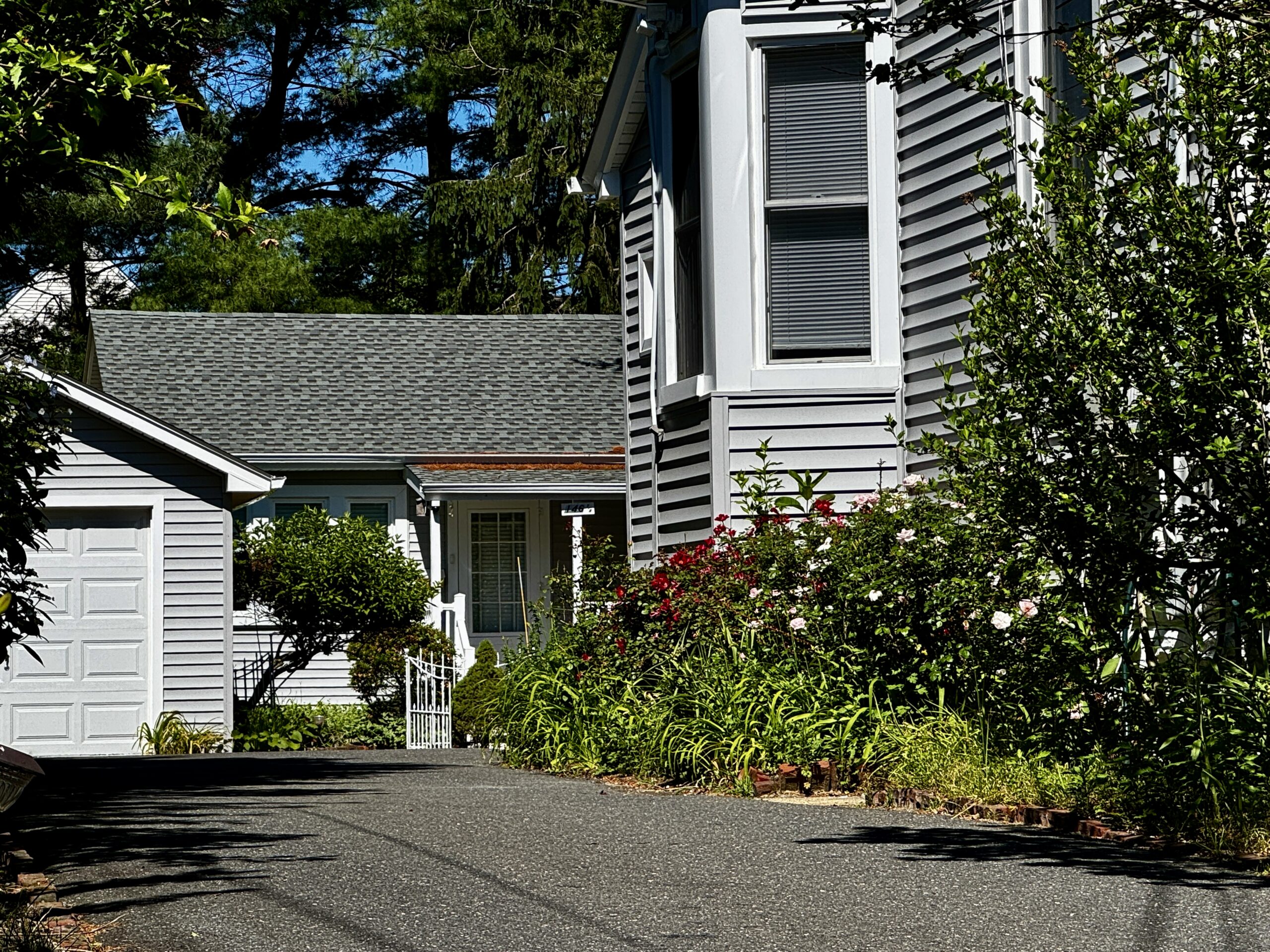
 Legal again: A backyard cottage on Hudson Avenue built before such ADUs were banned by 20th-century zoning laws (Photo by Brian Donohue. Click to enlarge.)
By BRIAN DONOHUE
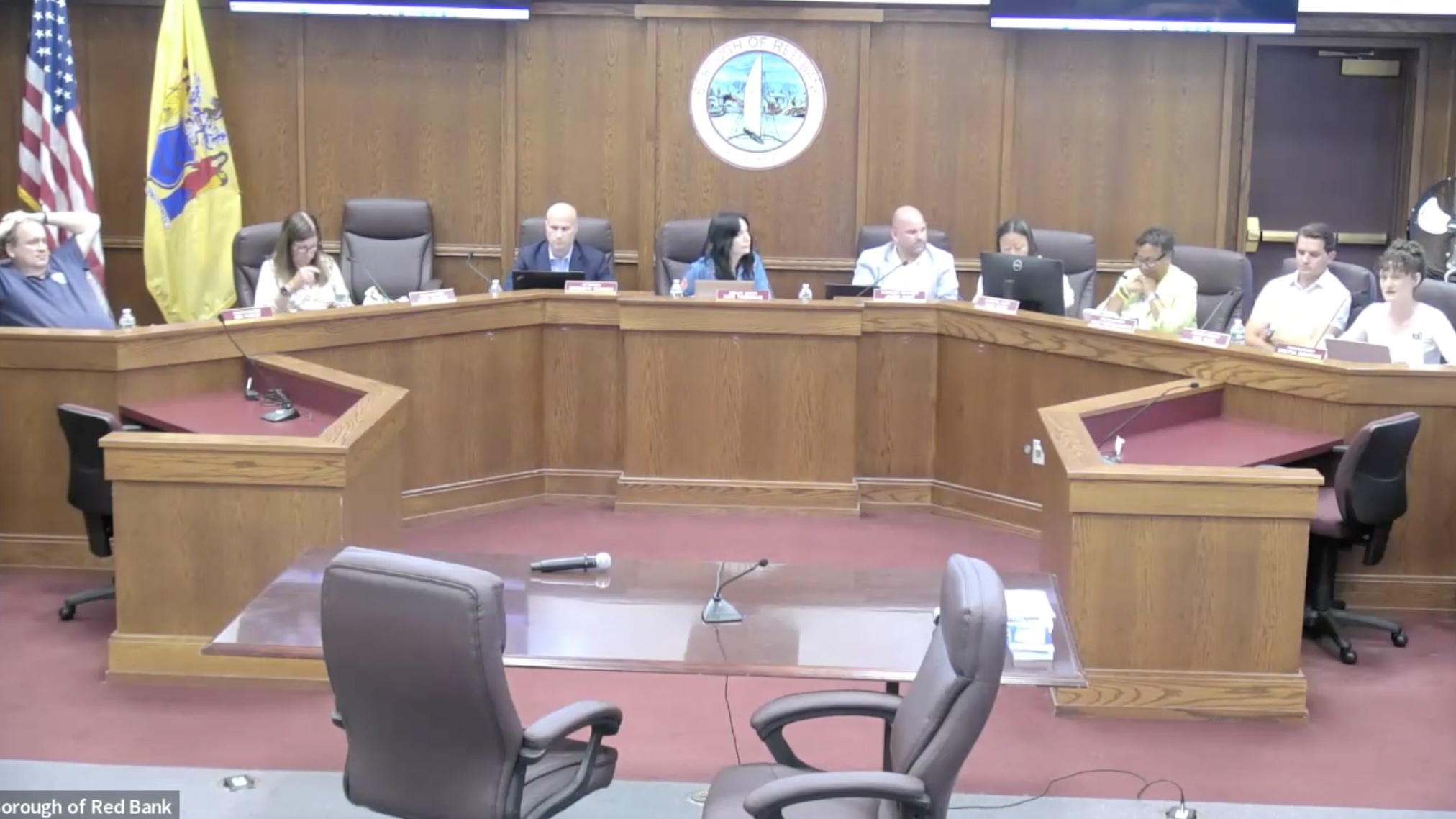
The amendments to the planning ordinances were made to align the borough’s planning and development ordinance with the 2023 Borough Master Plan, officials said.
The Red Bank Planning Board voted unanimously on Wednesday night, approving them as being aligned with the master plan. The Borough Council followed suit the next day with a unanimous vote to adopt them as law.
The changes include:
- Allowing resident owners of single-family homes in most residential zones to build an 800-square-foot or under accessory dwelling unit (ADU) in the backyard or garage. (See previous redbankgreen coverage here.)
- A ban on any cannabis facility within 500 feet of an existing cannabis business to prevent a clustering of weed shops. The borough has already issued its legal maximum of three cannabis retail licenses.
- A ban on new smoke/vape shops throughout the borough,
- Permitting boutique hotels, defined as a hotel with between 10 and 50 rooms, in the mixed-use BR-2 zoning district, which lies along the Chestnut Street/Oakland Street corridor and Drs. James Parker Boulevard east of Shrewsbury Avenue. (See zoning map here).
- A ban on large data centers in the borough’s industrial zone
- Allowing businesses with a parking deficiency of fewer than five spaces to gain approvals from borough hall without seeking a zoning variance.
Addressing the council via Zoom on Thursday, Borough Planner Susan Favate called it “phase one of master plan implementation zoning.” She said another series of smaller changes could be in the works to continue the process.
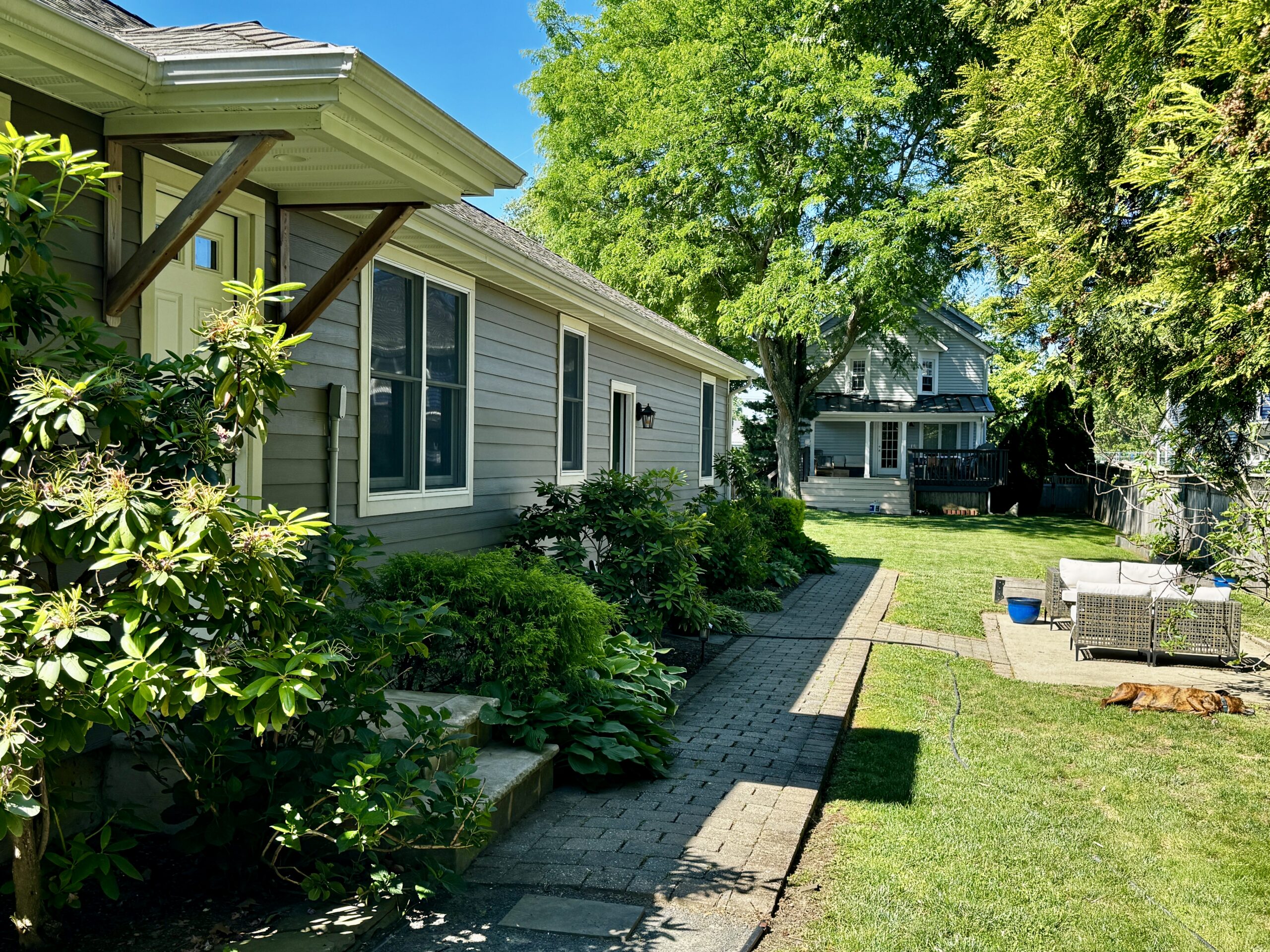
A grandfathered backyard cottage on Harrison Avenue in Red Bank.
The ADU ordinance is designed to help multi-generational families to remain in their homes amid a local and national housing affordability crisis.
It allows homeowners to convert a garage to an apartment or build a small one or two-bedroom house in the rear yard, so long as they live in either the main house or ADU. Under the ordinance, setback, density and other requirements vary widely from zone to zone.
A pair of residents who spoke in support of the ADU measure said they had concerns about aspects of the new law that could limit the number of homeowners who could take advantage of it.
“I think it’s an excellent addition to the regulations,” Harding Road resident David Schmetterer told the council. “My only caution is that I would be concerned that a lot of lots might be zoned out by default.”
Wallace Street resident Dennis O’ Sullivan addressed the council in support of the ordinance but raised several concerns about its implementation, including what effect an ADU on a property would have when the owner decides to sell it.
He also questioned the requirement that the property’s owner live in either the main dwelling or the ADU.
“This is intended to promote the ADUs, I presume,” he said. “And yet there are so many limitations that it may actually limit the promotion.”
At the planning board meeting the night before, board Chairman Dan Mancuso, voiced a similar concern about seemingly small details in the law. He called on the council to lower the minimum rear yard setback for ADU’s to six feet, saying the 8-foot rule in the current ordinance might make it impossible for some property owners to build.
Officials say the owner-occupied provision – common in ADU ordinances passed in recent years by other towns – is to prevent ADU’s from becoming multi-family rentals.
“It’s meant to be multi-generational housing, ” Triggiano said.
Favate said the key first step was to get the ordinance in place and tweak it with changes down the road based on demand or other issues that might arise.
“It’s a fairly significant change for the borough,” she said. “Really, it was an effort to start first. And it could clearly build over time based on interest.”
 A tweak of parking regulations seeks to make it easier for small businesses to gain approvals despite a parking shortfall of less than five spaces.
The parking ordinance is designed to address affordability for a different type of Red Banker: small businesses.
It allows businesses with a parking shortfall under zoning codes of less than five spaces to gain administrative approval from borough hall without seeking a variance. The move is in line with a national re-thinking of parking requirements in downtown business areas.
“We are removing the parking requirement in the downtown business zone and that is because the current condition of the busines zone: we are completely built out,” Director of Community Development Shawna Ebanks told members of the Planning Board Wednesday night.
“And it’s a hindrance for businesses that are trying to operate in our storefronts,” she added. “And having a parking requirement limits what can go in these areas.”
The revamped ordinance also addresses vape or smoke shops, which have proliferated and become a near constant source of complaints and, police allege, illegal activities.
A smoke shop on Monmouth Street shut down following the arrest of its owners in September on charges of illegal drug distribution. In 2024, employees of three downtown smoke shops were charged with selling restricted products to an underage buyer in an undercover police operation. 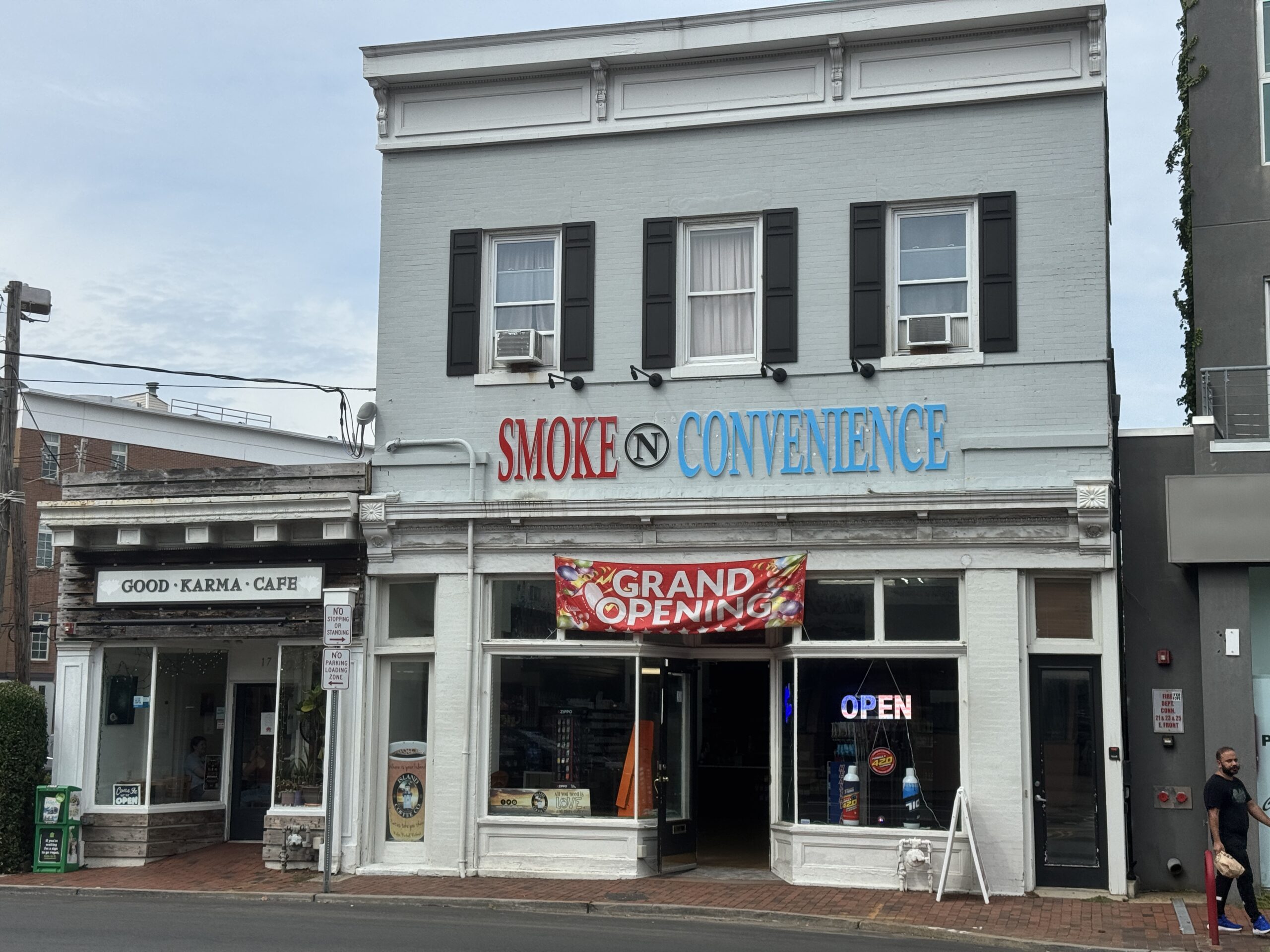
Worn out welcome: This smoke shop on East Front Street that opened earlier this year might be the last one to open now that the borough has banned them. (Photo by Brian Donohue)
At the Planning Board meeting, Ebanks said the new law was designed to prevent a type of business that had too frequently become a cover for illegal activity.
redbankgreen editor Brian Donohue may be reached via email at [email protected] or by calling or texting 848-331-8331.
Do you value the news coverage provided by redbankgreen? Please become a financial supporter if you haven’t already. Click here to set your own level of monthly or annual contribution.