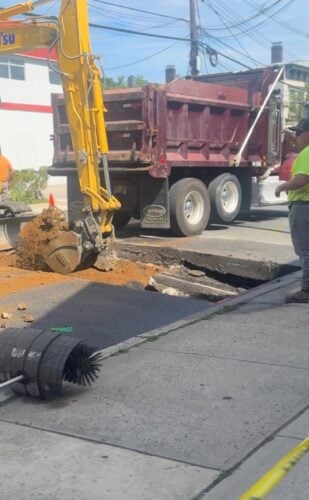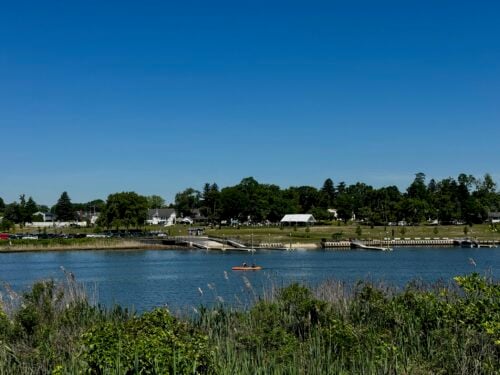




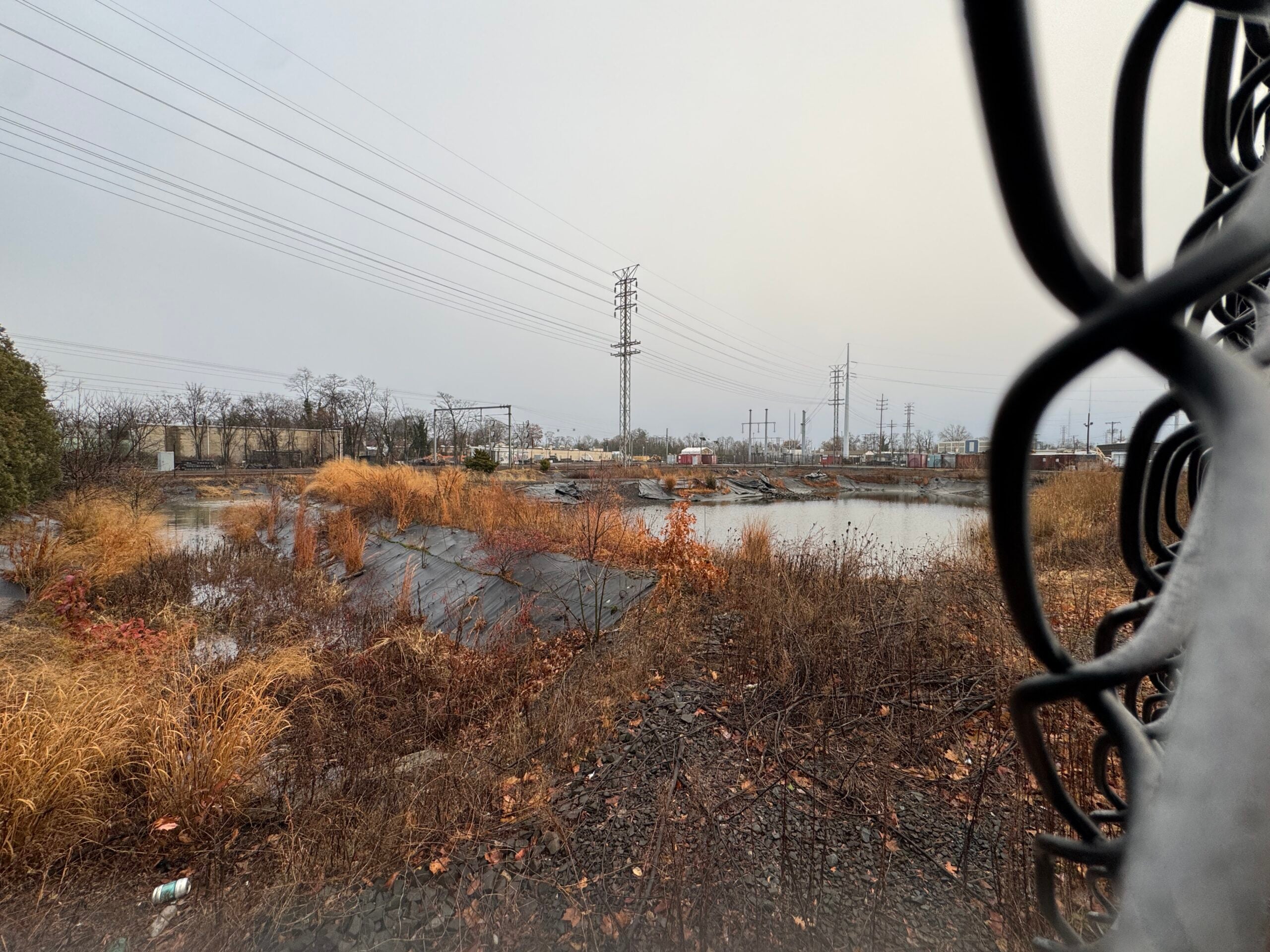
 A retention basin near the foot of Oratory Way and East Leonard Street inside the NJ Transit Rail yard would be drained to make way for an apartment building up to five stories tall under the train station redevelopment plan. (Photo by Brian Donohue. Click to enlarge.)
By BRIAN DONOHUE
The decades-old idea of transforming a large swath of the NJ Transit train station parking lots and nearby properties into a neighborhood of apartment buildings, new streets, and public plazas cleared a major hurdle Wednesday as the Red Bank Planning Board approved the Red Bank Train Station Redevelopment Plan.
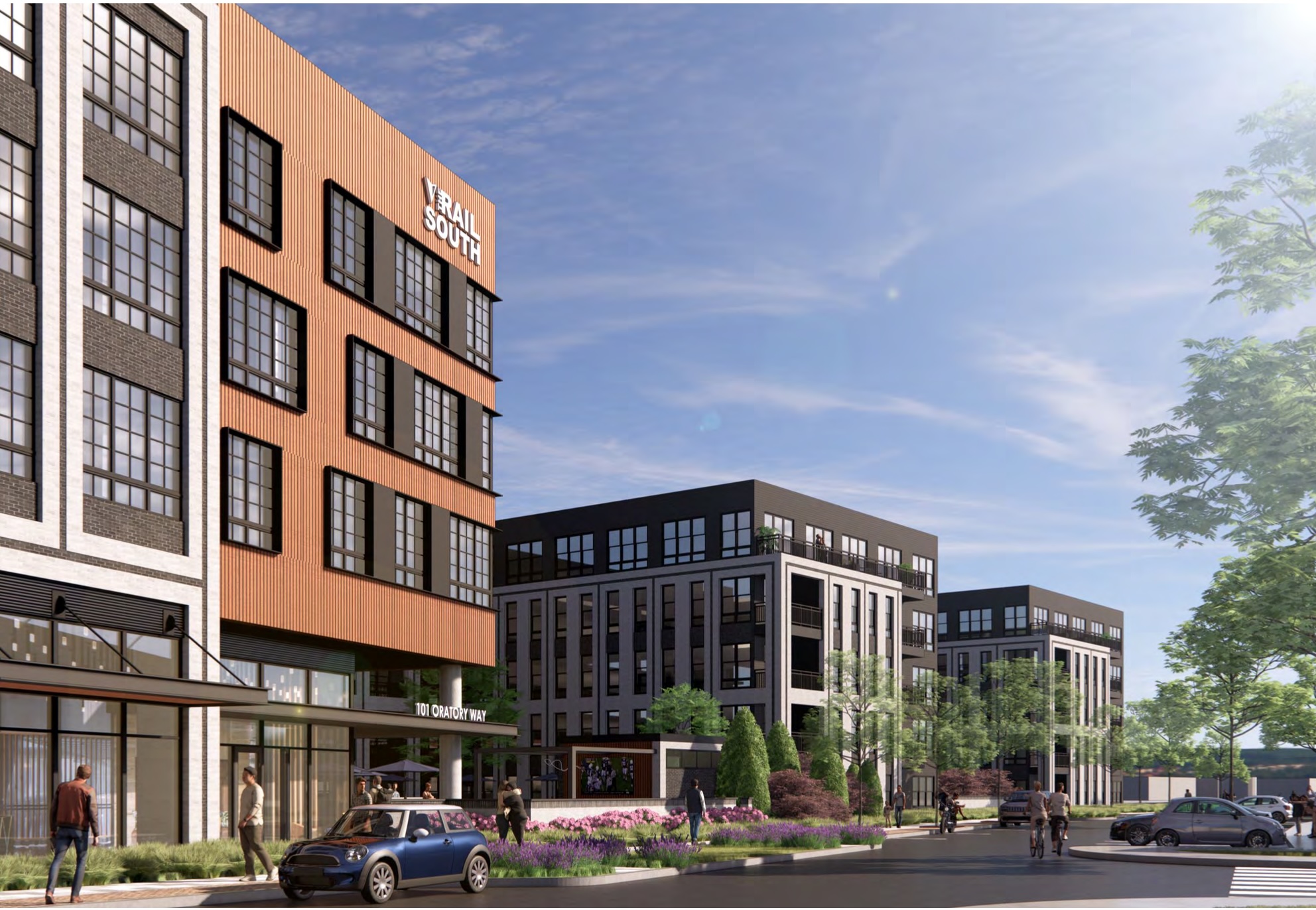
The 8-1 vote to approve the plan ended a process that included hours of public hearings over the past four months and multiple revisions to scale back the original plan prepared by borough planning firm BFJ Planning.
As in earlier versions, the final draft approved by the board sets the maximum number of apartments at 400. (read the full plan here.)
But a recent reduction in maximum building heights from six to five stories for the northern portion of the project has brought the number expected to be built to about 351, board members said, adding that number could change as plans are finalized.
“I’m not sure where we going to fall in terms of net loss of residential units,” said Susan Favate, principal in BFJ Planning.
Board members voting in favor cited a number of factors behind their decision, including the plan’s potential to achieve the long stated goal, encoded in the 2023 Master Plan, of turning under-used parking lots that pay no taxes into dense housing to create a more social and economic vibrancy.
The benefit most repeated, however, was the potential to create affordable housing, with the plan requiring 20 percent of the units to be set aside for income-eligible applicants.
The redevelopment plan will now go to the Mayor and Borough Council, who will vote on whether to encode the plan as an ordinance, essentially creating new zoning for the area.
Comments and “yes” votes by Mayor Billy Portman and Borough Council Member Kristina Bonatakis indicate already strong support on the governing body.
“It’s the right thing to do – we need to provide affordable housing,” Portman said. He also added, “We’ve been talking about increased density in the train station area for 30 years.”
Once the council approves it, Denholtz, NJ Transit’s designated developer and owner of other properties in the zone, would then return to the Planning Board seeking approval of a site plan, a specific blueprint for what would be built.
“This is not the final step,” Board member Barbara Boas said before casting her vote in favor of the project. “We will see you back here many times.”
While board member Fred Stone said he voted in favor of the project specifically because of its affordable housing component, concerns over that issue also drove the lone “no” vote against the project.
Planning Board Member Itzel Perez-Hernandez voted against the plan, saying she objected to recent changes that scale back the size because they could reduce the number of affordable housing units that would be built.
Despite Favate’s assurance that the change “is not going to be a dramatic decrease in affordable units,” Perez-Hernandez said even a small loss is not worth sacrificing for aesthetic reasons.
“Affordable housing is the first thing to get negotiated away in any project,” she said. “I’d give up not liking the look of a building to provide more housing for people if I could. If more people did that, there wouldn’t be a housing shortage.”
Comments from some of the the several dozen members of the public reflected the strong and divided opinions that have marked the debate over the project in casual conversations, social media, and on lawn signs in opponents’ front yards across town over the past several months.
Wednesday’s public statements skewed slightly more in favor of the project than in previous three meetings held on the plan at which opponents made their voices heard. A group of construction workers from Building and General Construction Laborers Local 77, based in Hamilton attended, with two members telling the board it would create jobs for local workers.
Resident Frank Corrado called the project “a massive improvement over what is there now.”
And Chestnut Street resident Phil Antoon, who said he will live close to the five-story apartment buildings, said the combination of affordable housing blended with market rate units, built with private funds and near mass transit presented an opportunity not to be missed.
“I don’t think you could come up with a better scenario for affordable housing if you tried,” he said.
Statements by borough officials have indicated the project would enable the borough to fulfill its latest state-mandated affordable housing requirement – an issue municipalities across the state are grappling with – in one fell swoop.
The Redevelopment Plan essentially creates a long list of requirements for both the affordable component and all other aspects of the project’s design.
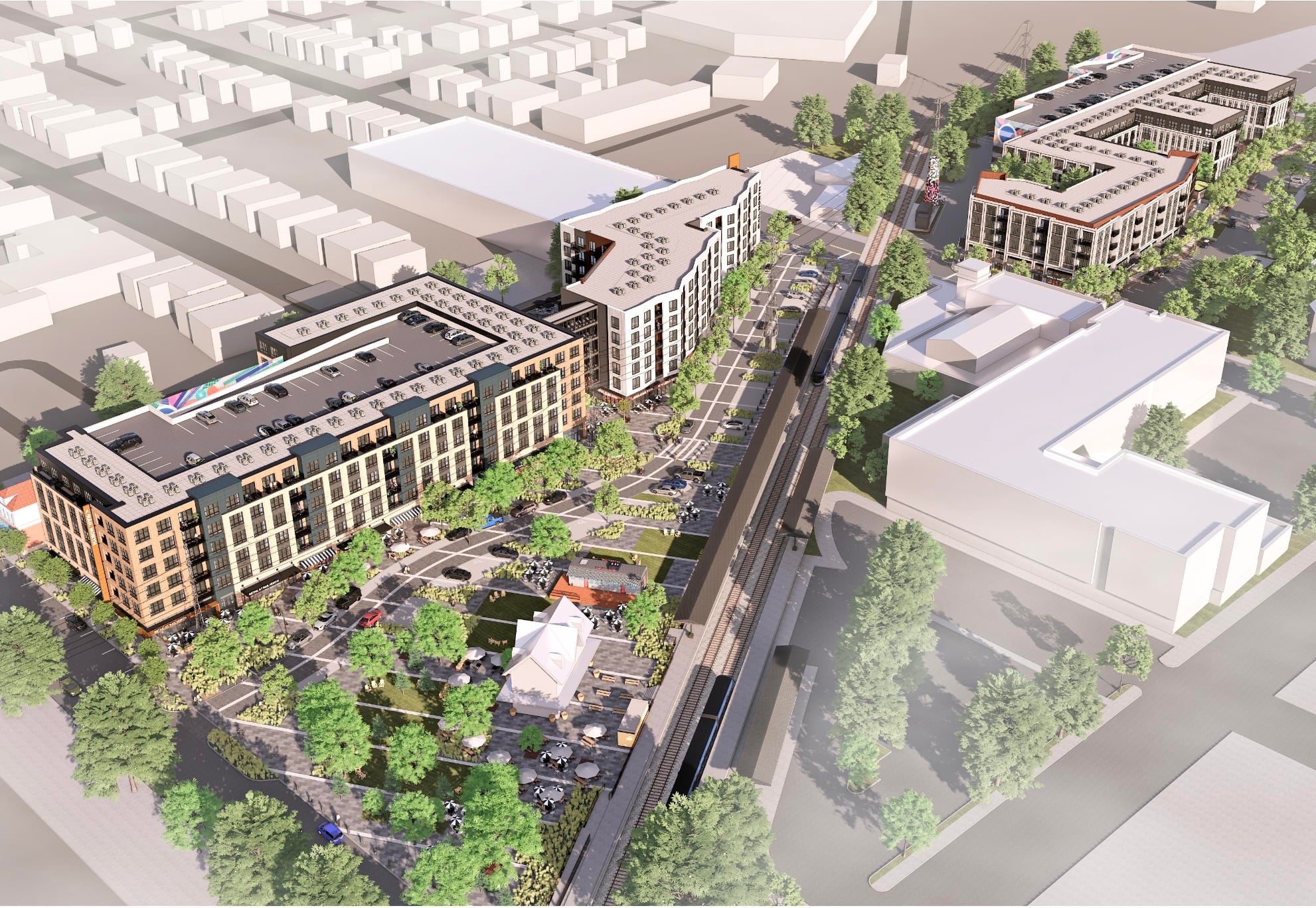
Building heights are limited to five stories. Two new public streets would be created. A section of Oakland Street would be a pedestrian only area. A maximum of 725 parking spaces for residents and the public would be set. Facades would have to reflect the prominent use of brick and historic architecture of surrounding neighborhoods.
Retail or non residential uses would be required on the ground floor of the north parcel between Monmouth and Chestnut Streets. And the area around the historic train station must be set aside as a public plaza.
None of the changes have assuaged critics, who once again took turns at the mic to decry the effect they say the project will have on traffic, parking, and the character of Red Bank.
“It was a quaint town,” Pearl Street resident Adrienne Bilaal told the board. “And we’re losing that.”
redbankgreen editor Brian Donohue may be reached via email at [email protected] or by calling or texting 848-331-8331 or yelling his name loudly as he walks by. Do you value the news coverage provided by redbankgreen? Please become a financial supporter if you haven’t already. Click here to set your own level of monthly or annual contribution.